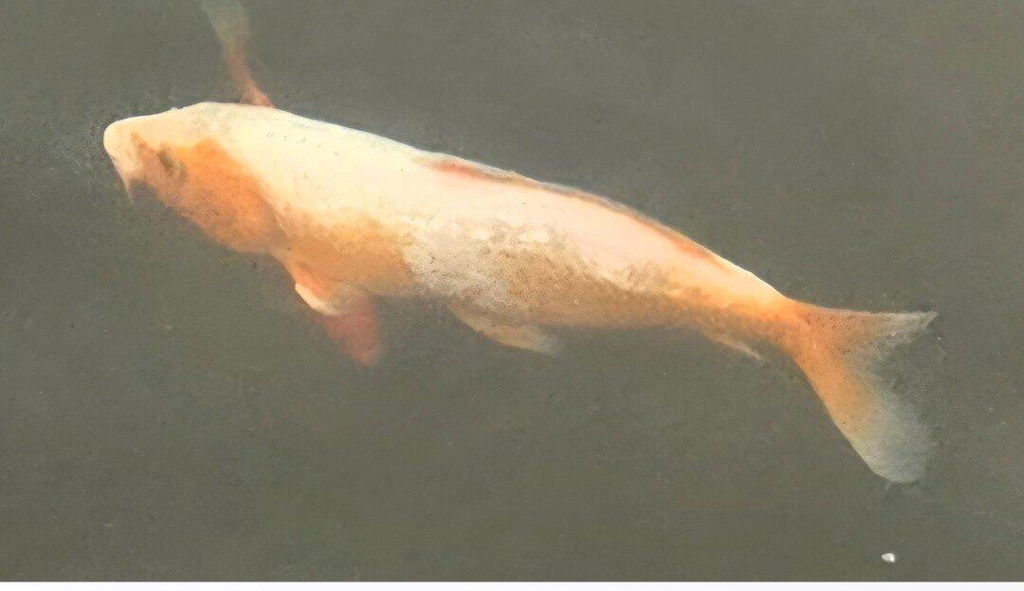
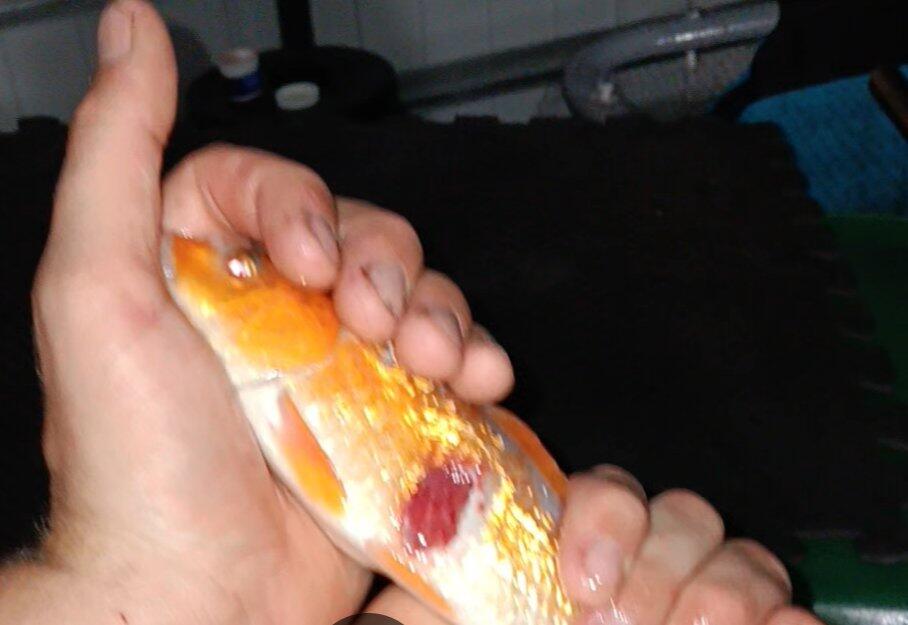
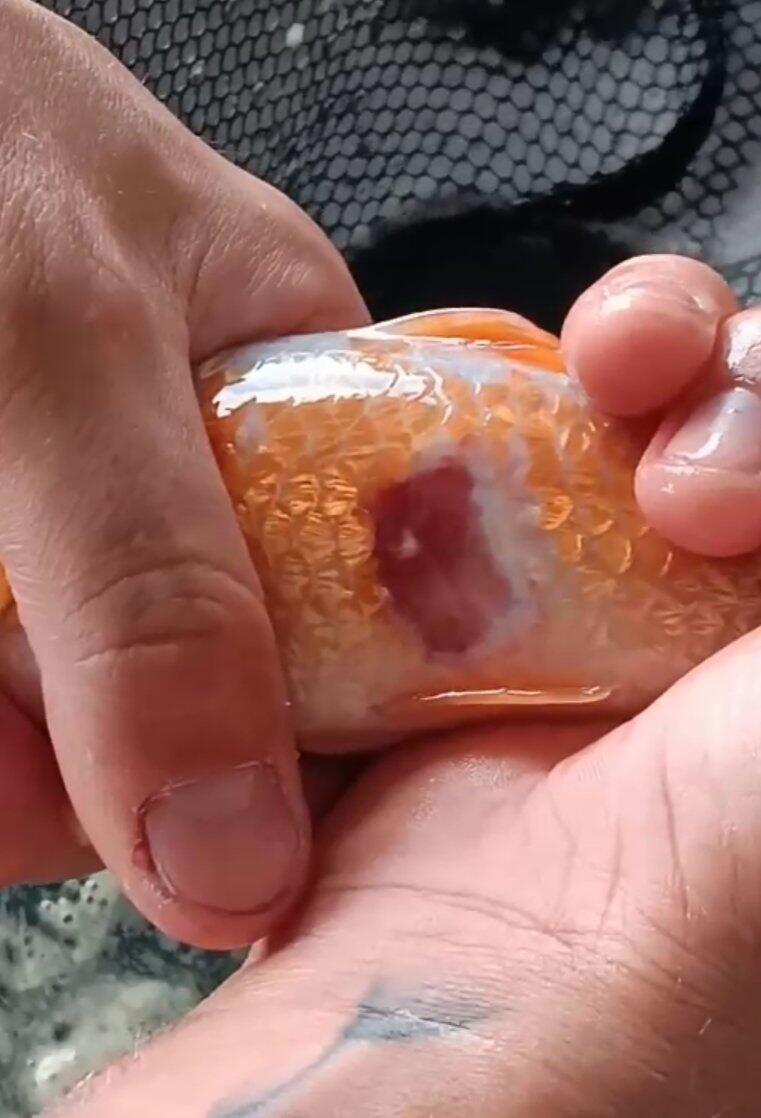
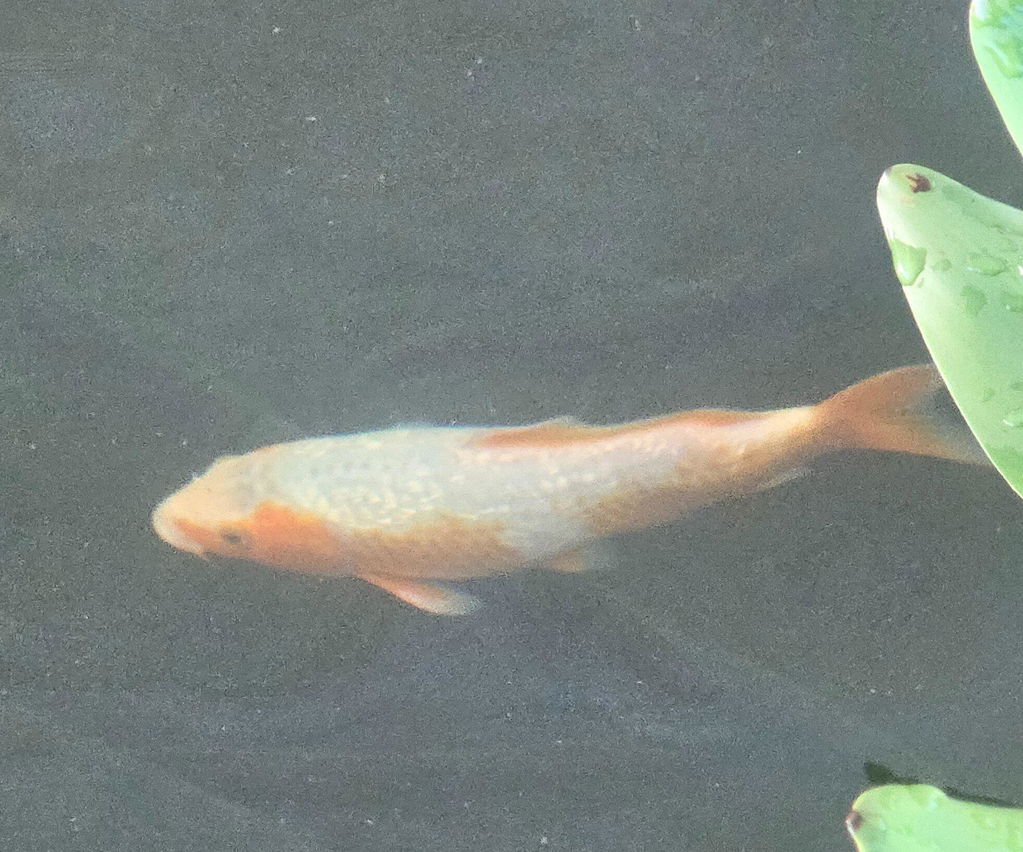
Winter is funded by what your fish eat this fall. A parasite load steals that from them.
Most koi keepers treat parasites the way most people go to the doctor. Something looks wrong, so they act.
A fish flashes. A fin clamps. A sore shows up on a shoulder. Somebody scrapes, or does not scrape, and then the bottles come out and the guessing starts.
That approach costs fish every year. But the reason it costs fish in the fall is not the reason most people think, so let me be clear about what I am actually arguing.
Preventative treatment is the best treatment. And the reason to do it right now, as your water comes down under 70 degrees, is not to protect your koi from parasites in January. It is to protect the last good feedings of the year.
Winter Is Paid For in Advance
Start with what winter actually is for a koi.
It is months of low metabolism, little or no feeding, and no growth, funded almost entirely by reserves the fish built in late summer and fall. Nothing meaningful is coming in. The account has to last until spring.
Which means the single most important thing that happens to your fish this year is not anything that happens in winter. It is whether the fish arrives at winter fat, strong, and in condition, or arrives thin and already behind.
A koi that goes in heavy and healthy holds condition and comes out in spring looking good. A koi that goes in weakened spends five months running down a reserve that was never adequate, and comes out thin, immunocompromised, and ready to develop the ulcer you will be fighting in April.
You do not fix that in winter. You fix it now, or you do not fix it.
Which Is Also Why You Do Not Switch Feeds
This is the clearest argument I know against the autumn feed switch, and it follows directly from everything above.
Every fall the pond industry tells people to move to a wheat germ or cool season food as soon as the water starts dropping. Look at what that actually does in light of the reserve you are trying to build.
These few weeks are the entire winter budget. Every feeding is a deposit, and you only get a handful of them left. Switching to a lower quality plant based feed at exactly that moment does not protect your fish from anything. It shrinks every deposit you have left to make.
Koi handle quality animal protein well. Plant protein is higher in starch and fiber, lower in usable protein, and harder for them to convert into body condition. So the advice asks you to hand your fish a less usable food during the one stretch of the year when it is actively trying to store everything it can. That is backwards, and the fish pays for it in February.
Keep feeding the same high quality, high protein food you have been feeding all summer. Reduce frequency as the water cools. Do not reduce quality. Nothing about the ingredient needs to change because the thermometer moved.
Clean fish, good food, every week the water gives you. That is the whole fall program.
The Window You Are In Right Now
As water comes down off summer highs, you enter the best feeding stretch of the entire year.
Somewhere under 70 degrees, everything lines up. The oxygen problems of August are easing. The fish are hungry and active. Their metabolism is still running well enough to convert food into real body condition. The biological filter is still processing at close to full capacity, so you can feed properly without wrecking your water.
This is the window where winter gets paid for. Every good feeding you get into your fish between now and the time water drops into the fifties is stored condition that has to carry them through months of nothing.
And in most parts of the country, you have a few weeks to a month of it. Not a season. A few weeks to a month, and then the temperature keeps falling and the opportunity is gone.
What a Parasite Load Does to That Window
Here is where preventative treatment stops being a nice idea and starts being the whole ballgame.
A fish carrying parasites does not eat well.
That is the short version, and it is enough on its own. Irritated, stressed fish go off feed. They flash instead of feeding. They sit instead of coming up. The appetite you are counting on to fatten them is exactly what a parasite load takes away first.
It goes further than appetite:
Damaged gills mean poor oxygen uptake, and a fish that cannot breathe efficiently will not eat aggressively or convert what it does eat.
An immune response costs energy. Every bit of it comes out of the same budget that is supposed to be building reserves. You are trying to make deposits while the fish is making withdrawals.
Damaged skin and gills have to be repaired, and that repair is funded out of the same account.
So you have a fish that eats less, absorbs oxygen worse, and spends part of what it does take in on fighting and repair, during the exact four to six weeks when it needed to be doing nothing but packing on condition.
You can feed that fish the finest food on the market and it will still go into winter behind.
And Yes, Parasites Slow Down in Winter
I want to address this head on, because it is where a lot of well meaning advice gets the timing wrong.
Parasites do slow down as water gets cold. Metabolism drops for them the same as it does for everything else in the pond. The nightmare scenario people imagine, of a parasite population feasting on defenseless koi all through January, is not how most of these winters actually go.
That is exactly my point.
The damage is not done in winter. The damage is done before winter, in the weeks you are in right now.
By the time everything slows down, the outcome is already set. The fish either got its feedings in or it did not. It either built a reserve or it did not. Winter does not do the killing. Winter just runs the clock on a fish that was already sent in underfunded.
This is why treating in October or November, when you notice something, is not the same as treating now. Same treatment, same products, completely different result, because by then there is nothing left to fatten the fish with.
Why You Cannot Just Handle It Later
Even setting the feeding window aside, waiting makes the treatment itself worse.
The fish has less margin. Treatment is a stressor even when it goes well. A cooler fish with lower reserves and reduced immune function has far less capacity to absorb that stress than the same fish at 68 degrees.
Your filter stops helping. Nitrifying bacteria lose substantial function as water approaches and drops below 50 degrees. Anything that stresses your biological filter is landing on a system already running at partial capacity.
The fish stop telling you anything. A cold koi sits still and does not eat. That is normal winter behavior, and it is also what a sick koi looks like. The behavioral signals you rely on are gone right when you would need them most.
You lose your ability to verify. Treat now and you can watch the fish respond, see the appetite come back, and repeat if you need to. Treat in the cold and you are working blind.
The Trigger Is 70 Degrees and Falling
Here is the rule, and it is simple.
When your water comes down under 70 degrees and you know it is going to keep falling over the next few weeks to a month, that is when you treat.
Not when you see flashing. Not when a sore appears. Not in December when you finally get around to it. When the water crosses under 70 on its way down, you treat, you get the fish clean, and then you spend every remaining warm week putting condition on them.
That sequence matters. Clean first, then feed. A treatment after four weeks of poor feeding does not give you those four weeks back.
For most people this window is opening now or will open shortly. Watch your own water, not the calendar, because a pond in North Carolina and a pond in Northwest Florida are on completely different schedules.
What Preventative Actually Means
Preventative treatment does not mean dosing your pond constantly. It does not mean pouring something in every few weeks because it feels responsible. That is its own kind of guessing, and it is how you stress fish and damage filters for no reason.
It means two deliberate, complete treatments a year, at the two transitions that decide everything: going into winter, and coming out of it.
Fall, so the fish can eat and build the reserve that carries them through.
Spring, because a fish coming out of winter is thin and immunologically slow right as water warms into the range where parasites and bacteria get to work.
The rest of the year you observe, you manage water, and you scrape if something looks off. You do not medicate on a schedule for its own sake.
The Objection Worth Taking Seriously
There is a legitimate argument against what I am describing.
It goes: do not medicate a pond that does not need medicating. Unnecessary treatment stresses fish, can knock back your biological filter, costs money, and contributes to resistance. Diagnose first, treat only what you find.
Every part of that is reasonable, and I would not argue with it in a perfect world.
Here is why I still land where I land.
Scraping is not as reliable as people think. A negative scrape tells you what was on that slide, from that spot, on that fish, at that moment. It does not tell you the pond is clean. Low level populations hide, they concentrate on gills you did not sample, and they distribute unevenly across a group of fish. I have watched people scrape repeatedly, find nothing, and lose fish anyway.
The cost of being wrong is not symmetrical. Treat a pond that did not strictly need it, using correct doses in a well aerated system at a sensible temperature, and the cost is some money and a little stress. Skip it while carrying a load you did not detect, and the cost is the entire feeding window, which you cannot get back, and possibly the fish.
Two treatments a year is not a resistance problem. Chronic undertreating is. Weak doses, partial protocols, and repeated hopeful splashes of something gentle are exactly how you select for resistant populations. Two complete, correctly dosed treatments a year is the opposite of that.
And we already accept this everywhere else.
Think about how you handle every other animal you are responsible for.
You give your dog heartworm prevention every month. You do not wait for the dog to get heartworms and then go treat heartworms. You treat for fleas and ticks before there is an infestation, not after. Horses get dewormed on a schedule. Every production animal in this country, cattle, poultry, swine, is managed preventatively, because the people responsible for them worked out a long time ago that prevention is cheaper, safer, and far more effective than waiting for a problem to show itself.
Nobody argues about this with a dog. Nobody tells you to hold off on heartworm prevention until you see symptoms and confirm a diagnosis.
And here is the part that should end the discussion. The heartworm test for a dog is considerably more reliable than a scrape is for a koi. We still do not wait for it. We prevent.
The other half of that comparison is what happens when you are late. Treating a dog that already has heartworms is expensive, hard on the animal, and sometimes it kills the dog. Prevention is cheap and safe. That is the identical math in your pond. Treating a healthy fish in 68 degree water is routine. Treating a sick fish in 50 degree water is a gamble, and you may lose it.
Your koi are livestock. Expensive, long lived livestock that you are responsible for. There is no good reason to hold them to a lower standard of care than you hold a dog.
I would rather treat a clean pond in September than watch a thin fish go into December.
What a Fall Treatment Has to Cover
If you are going to do this, do it completely. A partial treatment is the worst of both worlds. You take on the cost and the stress and still leave something behind to keep your fish off feed.
Three categories have to be covered:
Protozoan parasites. Costia, Chilodonella, Trichodina and the rest of the single celled parasites that irritate fish off their food and damage skin and gills. This is also where reducing organic load matters, because that accumulated summer sludge is where problems incubate.
Flukes. Gill and skin flukes are the most consistently underestimated problem in the hobby. Gill flukes in particular hit exactly the tissue a fish needs to breathe and feed hard during the window you are trying to use.
Anchor worm and fish lice. Less universal, but if you have them, they are visible damage and open wounds going into a season where nothing heals quickly.
This is why we built the Parasite Assassin Kit. Three treatments, applied separately, covering all three categories:
- Purple Magic, an oxidizer for stubborn parasites and pathogens, which also works on the organic load those problems live in
- Prazi Power, praziquantel, for flukes
- Anchor Armor, for anchor worm and fish lice
It comes in a 5,000 gallon kit at $99.99 for the average backyard pond, and a 10,000 gallon kit at $179.99 for large or heavily stocked systems. It is built for exactly two moments in the year, and one of them is right now.
I did not put those three products in a box because bundles sell well. I put them together because a partial parasite treatment is not a treatment.
Doing It Right
A few things determine whether this works or becomes its own problem.
Know your actual pond volume. Not the builder's number. Not an estimate. Every dosing failure I have ever been called about traces back to a guessed gallon count. Underdose and you select for survivors. Overdose and you kill fish. Measure it, subtract for rock and gravel, and write it down somewhere permanent.
Aerate hard. More than you think you need, before and throughout. This is not optional and it is the most common corner people cut.
Treat on stable water. Not during a temperature swing, not right after heavy rain, not when your parameters are already moving. Verify ammonia, nitrite, pH and KH first.
Treat at the top of the window, not the bottom. Do this at 68 degrees, not at 52 because you kept putting it off. The whole point is to have weeks of good feeding left afterward.
Follow the full protocol. Three treatments means three treatments. Stopping after the first because the fish look better is how populations rebuild.
Then feed them. This is the part people skip. The treatment is not the goal. The treatment is what makes the feeding work. Once the fish are clean and eating hard, get quality food into them for every week the water gives you.
The Spring Problem That Started in September
Every year, in March and April, the same thing happens across the hobby.
Water warms. Fish come up thin and slow. Somebody notices a sore on a shoulder, a fish sitting on the bottom, a fin that has gone. The ulcers appear. The panic buying starts. And it gets called a spring problem, because spring is when it became visible.
It is not a spring problem.
It is a fish that spent the best feeding weeks of the year irritated, off its food, and running an immune response instead of building reserves. It went into winter underfunded. It spent five months drawing down an account that was short to begin with. And it arrived at spring with no condition left and no ability to heal, right as the water warmed into the range where bacteria do their best work.
What changed in the system was not that spring came. What changed was that nobody protected the fall.
That is the whole case for preventative treatment. Not because any bottle is magic, but because a clean fish in September eats, and a fish that eats in September survives March.
The window is open. It closes a little more every week.
Jason Michael is a degree trained aquaculturist with more than 30 years of professional experience in aquaculture, fish health, and koi husbandry, including a decade managing one of the largest koi farming operations in Northwest Florida. He is the founder of Krazy Koi Meds.