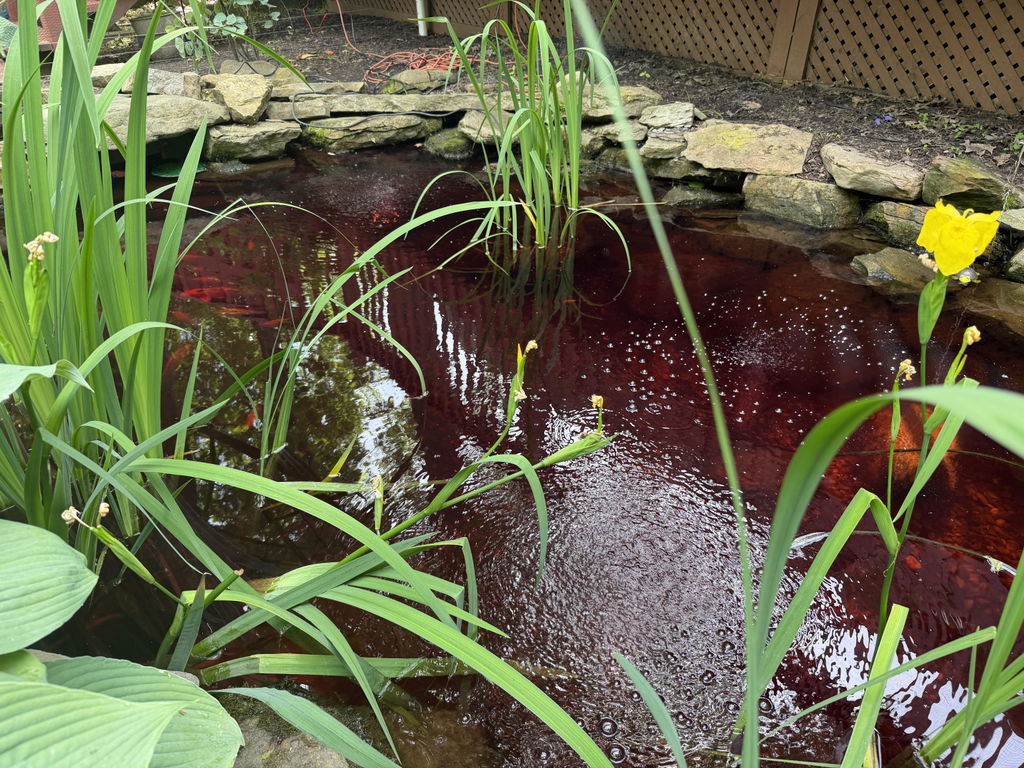
Every summer, the same thing happens. Temperatures climb, and koi forums light up with warnings like the pond is about to boil over. Stop feeding. Add ice. Watch your fish every hour. It’s the same energy people bring to winter, except now it’s aimed at the season that’s actually good for your koi. Let’s be clear about something: warm water is not the threat. Koi are warm-season animals. Their metabolism runs stronger, their immune systems function better, their growth accelerates, and their appetite improves. If you’ve got healthy koi, summer is when they should be thriving — not the season you spend white-knuckled over a thermometer.
The Real Variables Are Oxygen and Organic Load — Not Heat
Here’s what actually deserves your attention. Warm water holds less dissolved oxygen at the exact moment your koi’s oxygen demand goes up. That’s a real mechanism, and it’s worth managing. But “manage” doesn’t mean panic. It means keep your aeration strong and consistent, especially overnight.
The other piece is organic load. Heavier feeding in warm weather means more waste. Algae blooms and pond plants that produce oxygen during the day flip to consuming it at night. Combine a heavy bioload with a nighttime oxygen dip and that’s when you get problems — not because it’s hot, but because oxygen supply didn’t keep up with demand.
That’s it. Two variables. Not a crisis, not a season to fear — just two things to stay ahead of.
What Actually Helps
- Keep aeration running strong, day and night, especially through the warmest stretch of summer.
- Feed based on what your fish are actually doing, not a fixed schedule. Koi eating well and growing in warm water is normal and good — don’t starve them out of fear. A quality warm-season koi food supports that growth.
- Watch for heavy algae or plant mass that could be pulling oxygen down overnight, and manage it if it’s excessive. A little algae isn’t the enemy either.
- Keep an eye on organic buildup from increased feeding, since waste load and oxygen demand move together.
None of this is complicated. It’s the same boring, consistent maintenance that works in every season — strong aeration, appropriate feeding, and controlling waste before it becomes a problem.
What You Don’t Need to Do
You don’t need to dump ice into your pond. You don’t need to slash feeding to nothing the second it hits 85°F. You don’t need to treat every hot day like an emergency. That kind of advice comes from people reacting to fear, not from people who understand what’s actually happening in the water.
The Bottom Line
Heat isn’t what hurts koi in the summer. Oxygen debt and organic overload do — and both are predictable, manageable, and nothing new if you’re already running a stable system. Warm water should be one of the best periods of the year for your koi’s growth and condition. Don’t let panic-driven advice talk you out of that.
Keep your aeration strong. Feed your fish. Manage your waste. That’s the whole system — no ice required.
Set your pond up for a strong summer. Shop aerators and pond maintenance equipment, fuel growth with Koi Fuel, and read our guide to pond oxygen and aeration.
Written by Jason Michael, a 30-year aquaculture professional with experience in commercial koi farming and fish health management.