Potassium permanganate is one of the most misunderstood and most effective tools in koi keeping when it is used correctly. Unlike many treatments that only target a specific parasite or symptom, potassium permanganate works on the entire pond system. It reduces parasite pressure while also oxidizing organic waste throughout the pond.
This is why I am such a strong believer in PP and why I recommend every koi keeper use it at least once a month.
Why Potassium Permanganate Is Different
Most parasite treatments are medications. Potassium permanganate is different. PP is an oxidizer. That distinction matters.
PP works by oxidizing organic material in the pond. As it does this, it also kills or suppresses external protozoan parasites like costia, trichodina, and chilodonella. At the same time, it cleans organic buildup throughout the system. This dual function is what makes it so valuable.
You are not just treating fish. You are cleaning the environment the fish live in.
Why Monthly PP Treatments Matter
Parasite pressure is never zero in a koi pond. Protozoan parasites are always present at some level. The goal is not to pretend they do not exist. The goal is to keep their populations suppressed so they never gain enough pressure to overwhelm the fish. Monthly PP treatments accomplish this extremely well.
By using potassium permanganate consistently, you reduce parasite populations before they become a problem. At the same time, you continuously oxidize dissolved organics, sludge, and waste accumulation that contribute to poor water quality and chronic stress.
This is especially important in ponds with bog filters, wetland systems, gravel bottoms, rock-filled ponds, and heavy organic accumulation. These systems trap enormous amounts of waste and organic material. PP helps penetrate those areas and oxidize buildup that normal maintenance often misses.
Why I Prefer PP Over Most Treatments
Products like FMG, including my Critter Quitter, are excellent treatments and work very well against costia, trichodina, and chilodonella. FMG also has some activity against fungal issues like saprolegnia.
But PP offers something additional that other treatments do not. It cleans the pond itself.
That is one of the biggest reasons I am such a strong PP advocate. You are lowering parasite pressure while simultaneously improving the overall cleanliness and biological stability of the system.
Why People Struggle With Potassium Permanganate
Most problems with PP happen because hobbyists try to treat it like a standard medication.
Potassium permanganate does not behave like “one gram treats X gallons” regardless of conditions. Every pond reacts differently because every pond has different organic load, fish load, filtration design, and maintenance history.
A heavily stocked pond with dirty filters and accumulated waste will consume PP rapidly. A clean pond with low organics will hold color much longer. This is why two ponds with identical gallonage can behave completely differently during treatment.
What the PP Color Actually Tells You
The goal during treatment is to maintain a pink to darker pink coloration for approximately three to four hours. That duration is important because it tells us PP is remaining active long enough to oxidize organics and suppress parasites effectively.
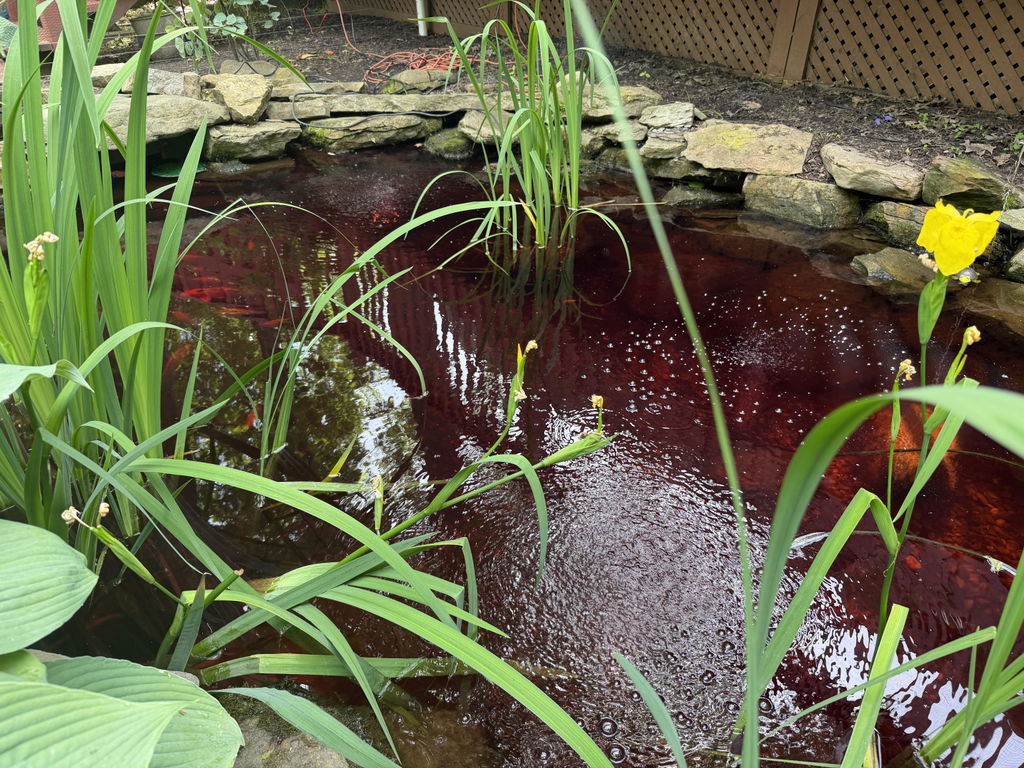
When PP turns brown or tea-colored quickly, it does not mean the treatment failed. It means the pond consumed the oxidizing power rapidly because there was a large amount of organic material present. In other words, the PP worked exactly as intended.
How to Use Purple Magic Correctly
My standard Purple Magic dose of one ounce per 300 gallons is intentionally conservative. I do this because many hobbyists are new to PP, and a lower starting dose provides a safer introduction while allowing people to learn how their pond responds.
The key is not simply adding PP once and walking away. The key is maintaining activity. If the initial dose only lasts 30 minutes to an hour before turning tea-colored, additional PP is added in smaller increments to bring the color back and continue the treatment window.
For example, if the original dose was 10 ounces and it fades quickly, another 5 ounces may be added. If it fades again, another smaller addition is made. The goal is to continue walking the pond toward that three to four-hour active period.
Over time, something very interesting begins to happen.
What Happens When You Use PP Monthly
As the pond becomes cleaner, PP lasts longer. The first treatment may only stay active for 30 minutes. The next month it may last 45 minutes. A few months later the same dose may remain active for two or three hours.
This tells you the pond is carrying less organic waste. The system is becoming cleaner and more stable. This is one of the biggest advantages of long-term PP use. The pond gradually becomes easier to maintain and less prone to parasite-related problems.
Why New Users Should Not Panic
One of the biggest misconceptions is that short PP duration means failure. It actually means the opposite. Potassium permanganate only works when it encounters material to oxidize. If it burns out quickly, it found plenty to work on. That means the pond needed it.
What PP Does and Does Not Do
PP is extremely effective against costia, trichodina, and chilodonella. It also reduces organic buildup throughout the pond.
It may have some limited impact on flukes, but it does not reliably break the fluke lifecycle. Separate fluke treatment with praziquantel (Prazi Power) is still necessary when flukes are present. Understanding what PP is designed to do and what it is not designed to do is critical for successful long-term management.
Why PP Does Not Destroy Healthy Biofilters
One of the biggest myths surrounding potassium permanganate is the idea that it destroys biological filtration. In properly maintained ponds using reasonable doses, this is simply not true. The confusion comes from misunderstanding how PP actually works.
Potassium permanganate oxidizes organic material. Its primary demand is dissolved organics, sludge, waste buildup, and parasite load within the pond system. In established ponds with mature biofilters, beneficial bacteria are protected within biofilm layers attached to filter media surfaces. PP is rapidly consumed by available organics long before it penetrates deeply enough to wipe out healthy bacterial colonies.
This is why hobbyists using Purple Magic correctly do not see their ponds suddenly “recycle” after treatment.
What often happens instead is people mistake an already unstable filter system for PP damage. If a pond already has poor filtration, excessive waste buildup, overloaded stocking levels, or unstable KH, the system may already be struggling before treatment ever occurs. PP simply exposes weak systems. It does not create the weakness.
In fact, many ponds actually perform better after PP treatments because excessive organic load is reduced. Cleaner systems allow biological filtration to function more efficiently by reducing oxygen demand and waste accumulation throughout the pond and filter system.
Like any treatment, abuse and overdosing can create problems. Extremely high concentrations or repeated aggressive treatments can absolutely damage filtration. But properly managed monthly PP use at controlled doses does not wipe out mature biofilters the way internet rumors often claim. A stable pond with a healthy filter system tolerates PP extremely well when it is used correctly.
Final Thoughts
Potassium permanganate is one of the most powerful tools available for koi pond management when it is understood and used correctly.
It reduces parasite pressure, cleans organic buildup, improves system cleanliness, and helps stabilize ponds over time. Very few treatments provide that combination of benefits. If more hobbyists used PP consistently once a month, they would experience far fewer parasite problems, cleaner systems, and significantly healthier fish long term.
Purple Magic is not just a parasite treatment. It is a system management tool.
Ready to start a monthly routine? Get Purple Magic (liquid potassium permanganate), pair it with Prazi Power for flukes, and browse all koi parasite treatments.
Written by Jason Michael — a 30-year aquaculture professional with experience in public aquariums, research facilities, and advanced koi health management.